Government Risk Profiling: A Threat to Civil Rights
Margriet Vermeer ·
Listen to this article~4 min
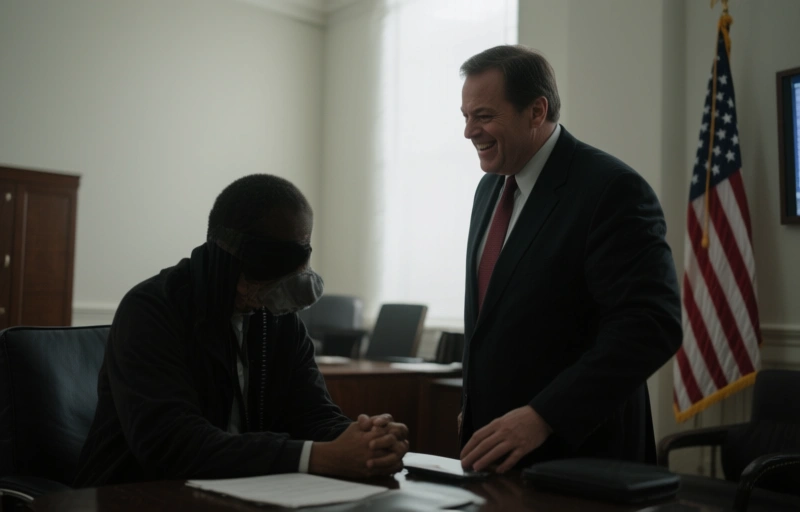
Government risk profiling can hide dangerous biases. A new study warns that without clear rules, discrimination and harm are inevitable. Learn what principled measures could protect civil rights.
When the government starts profiling its own citizens, the line between safety and discrimination gets dangerously thin. A new study from the University of Amsterdam warns that without clear, principled rules, risk profiling can do more harm than good. And that's not just a European problem—it's a conversation we need to have here in the United States too.
### The Core Problem: Bias Hidden in Data
Risk profiling sounds neutral. It's just data, right? Wrong. The algorithms and criteria used to flag people often reflect the biases of the people who built them. Think about it: if a system is trained on historical arrest data, and those arrests were skewed by race or class, the system will just repeat those same patterns. It doesn't question them. It just learns them.
- **Historical bias**: Algorithms trained on biased data produce biased outcomes.
- **Lack of transparency**: Many profiling systems are black boxes—nobody knows exactly how decisions are made.
- **No accountability**: When a system makes a mistake, who is responsible? Often, nobody.
The study emphasizes that without principled measures—like independent oversight, regular audits, and clear legal standards—the risk of discrimination remains too great. In the U.S., we've seen this play out with predictive policing tools that disproportionately target communities of color. It's not a hypothetical. It's happening.
### Why This Matters for the United States
We're not talking about some far-off academic debate. In the U.S., federal agencies already use risk profiling for things like airport security, immigration enforcement, and even social services. The problem is that these systems can turn everyday interactions with the government into high-stakes moments for certain groups.
> "Without principled measures, the risk of discrimination and harm remains too great." — University of Amsterdam study
This quote hits hard because it's true. When a system is designed to catch the "bad guys," it often ends up catching everyone who fits a certain profile—regardless of their actual behavior. That's not just unfair. It's unconstitutional.

### What Principled Measures Look Like
So what would a better system look like? The researchers suggest a few key steps:
- **Independent oversight**: A third party that can review how profiling tools are built and used.
- **Transparency**: The public deserves to know what criteria are being used to flag people.
- **Regular audits**: Systems should be tested for bias on a regular schedule, not just when something goes wrong.
- **Legal safeguards**: Clear laws that limit how and when profiling can be used.
These aren't radical ideas. They're basic protections that any democratic society should have. Without them, we're essentially letting algorithms decide who gets treated with suspicion and who gets the benefit of the doubt.
### The Human Cost
Let's get real for a second. Risk profiling isn't just an abstract concept. It has real consequences. People get pulled aside at airports. They get denied jobs. They get extra scrutiny from police. All because an algorithm decided they looked suspicious. And when the system is wrong—which it often is—there's no easy way to appeal.
The study from the University of Amsterdam is a reminder that technology doesn't solve problems by itself. It needs to be guided by ethics, law, and a commitment to fairness. Otherwise, it just makes the problems worse.
### Moving Forward
We have a choice. We can keep building systems that reinforce old biases, or we can demand better. That means asking hard questions: Who designed this tool? What data was it trained on? How do we know it's fair? And if we can't answer those questions, we shouldn't be using it.
The government has a responsibility to protect its citizens. But that protection shouldn't come at the cost of their rights. As the study makes clear, without principled measures, the risk of discrimination and harm remains too great. It's time we listened.