How Racism Shapes Politics and Social Issues Today
Margriet Vermeer ·
Listen to this article~6 min
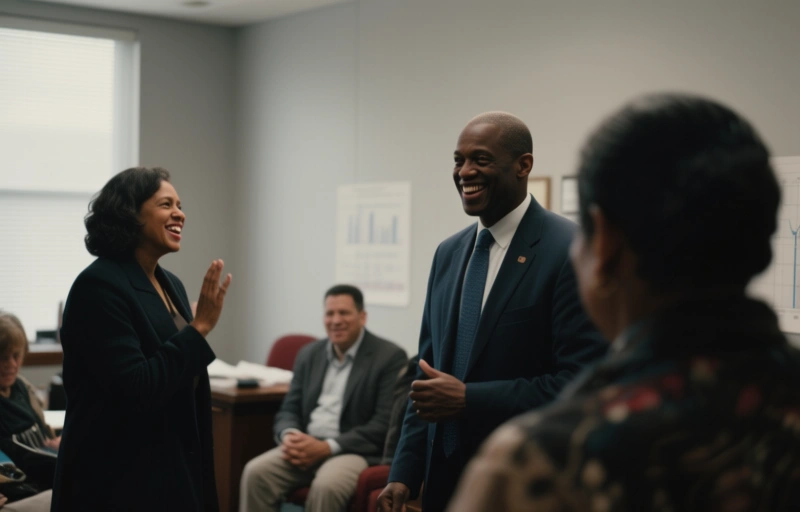
Racism isn't just personal prejudice—it's embedded in political systems and social structures. Understanding this connection reveals why disparities in housing, education, and justice persist today.
You're probably wondering how we got here—how racism became so deeply embedded in our political systems and social fabric. Honestly? It's not a new story, but the chapters we're living through right now feel particularly raw. The connection between racism, politics, and broader social issues isn't just theoretical; it's the lived reality for millions. It shapes everything from housing policies and education funding to who gets stopped by the police and who doesn't. It's a messy, complicated web, and untangling it requires looking at history, power, and the very structures we've built our societies upon.
### The Political Machinery of Division
Look, I get it—politics can feel abstract. But when you trace the line from a campaign speech to a voting rights law to a neighborhood's crumbling infrastructure, the picture gets clearer. Politics is the mechanism. It's how power gets distributed, resources get allocated, and rules get written. And for a long time, that mechanism was explicitly designed to exclude.
I'm talking about gerrymandering that dilutes minority voting power, or the racialized rhetoric that still pops up in political campaigns. The 'us versus them' narrative is older than the country itself. Speaking of which, the legacy of those choices isn't just in history books. It's in the data.
It's in who has access to capital for a small business loan, or which school districts are chronically underfunded. These aren't accidents; they're outcomes. They're the result of political decisions, both past and present, that prioritize some groups over others.
When you start asking 'why'—why is this community a food desert, why does this zip code have worse health outcomes—the answer almost always leads you back to policy. Back to politics. Which reminds me... it's easy to think of racism as just personal prejudice. But that's only part of it.
The bigger, stickier part is systemic. It's baked into the algorithms that screen job applicants and the zoning laws that determine where people can live. It's a quiet, persistent force, and it doesn't require a single racist actor to keep functioning. It just requires inertia.
A system built on an unequal foundation will keep producing unequal results unless someone actively dismantles it. And that 'someone' is, again, political.
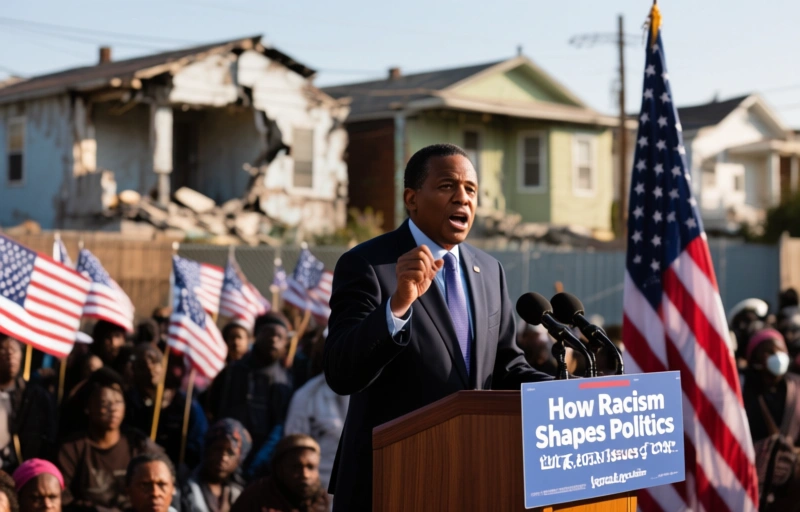
### Social Issues as the Battleground
So where do social issues fit in? They're the battlefield. They're the tangible, everyday manifestations of those political and systemic forces. Think about the criminal justice system, or access to healthcare, or the quality of public education.
These aren't neutral topics. They're deeply racialized, and they become the flashpoints for our biggest national conversations—and our most painful conflicts. Take housing, for instance. It's a social issue, right? Everyone needs a place to live.
But the history of redlining—where banks and federal policies literally drew red lines on maps around Black neighborhoods and refused to insure mortgages there—is a history of racist policy creating a social crisis. That was decades ago, but the wealth gap it created is still with us.
The neighborhoods are still segregated. The opportunity isn't equal. That's the link. A political decision from the past directly shapes a social reality in the present.
And the debates we have about these issues? They're never just about the issue itself. They're about values, identity, and competing visions for society. They're about who deserves what, and why.
When people argue about welfare, or immigration, or affirmative action, they're often arguing about deeper, unspoken questions of race and belonging. The social issue is just the container for a much heavier load.
It's exhausting. But it's also where change happens. Because social movements—the people organizing, protesting, and demanding better—apply the pressure that eventually forces the political system to respond.
### The Tangible Impacts We See Every Day
Let's get specific about how this plays out in real life. The connections aren't always obvious until you start connecting the dots.
- **Housing disparities**: Neighborhoods that were redlined decades ago still show lower property values today, sometimes by hundreds of thousands of dollars
- **Education gaps**: School districts serving predominantly minority students often receive thousands of dollars less per student in funding
- **Health outcomes**: Life expectancy can vary by 20 years or more between zip codes just miles apart
- **Criminal justice**: Black Americans are incarcerated at nearly five times the rate of white Americans
- **Economic mobility**: The racial wealth gap means white families have about eight times the wealth of Black families on average
These aren't just statistics—they're people's lives. They're the result of systems that were built with certain assumptions about who mattered and who didn't.
### Where Do We Go From Here?
Here's the thing that keeps me up at night: systems don't fix themselves. They require intentional effort. They require people showing up at city council meetings and voting in local elections. They require asking uncomfortable questions about why things are the way they are.
It requires recognizing that racism isn't just about individual acts of prejudice. It's about structures and policies that continue to produce unequal outcomes, even when nobody involved has bad intentions.
As one community organizer put it recently: 'We're not fighting people, we're fighting patterns. We're not blaming individuals, we're challenging institutions.' That distinction matters because it changes how we approach solutions.
Change happens when we stop treating these issues as separate problems and start seeing them as interconnected parts of the same system. When we understand that fixing education requires addressing housing, and that addressing housing requires looking at economic policy.
It's complicated, sure. But understanding the connections is the first step toward untangling them. And that understanding starts with honest conversations about how we got here—and where we need to go next.