Racism, The Political System, and Social Justice
Margriet Vermeer ·
Listen to this article~5 min
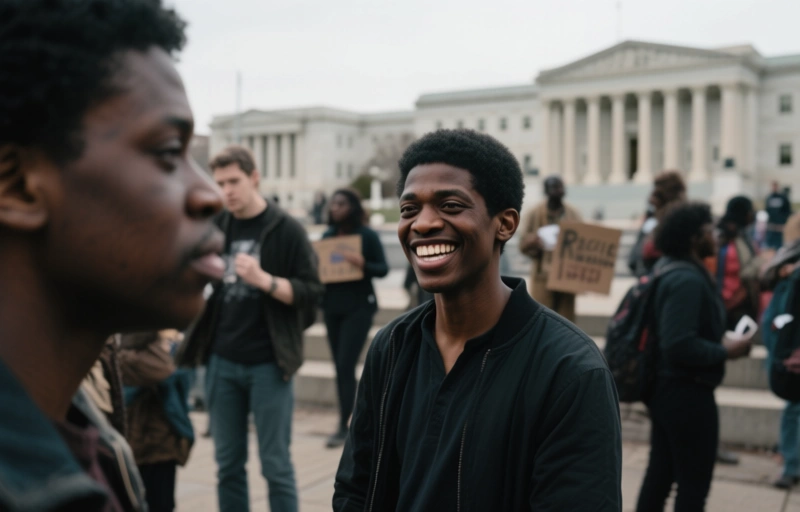
Racism isn't just personal prejudice—it's a social issue with deep political roots. Understanding the link between injustice and the systems that uphold it is key to creating meaningful change.
You're probably wondering why conversations about racism feel so charged, so political, so... everywhere. Honestly? It's because racism isn't just a personal prejudice—it's a foundational social issue with deep political roots. It shapes who gets power, who gets policed, and who gets a fair shot. True story.
Look, I get it. The topic's heavy. Makes sense. But understanding that link—between racial injustice and the systems that uphold it—is the first step toward untangling a very complex knot.
### Is Race a Political or Social Issue? (It's Both)
That's the wrong question, really. It's like asking if water is wet. Race is a social construct—a way societies have categorized people—but it becomes a political issue the moment those categories are used to distribute power, resources, and justice.
Think about it. Housing policies like redlining, voting rights battles, criminal sentencing disparities... these aren't accidents of history. They're political decisions with profound social consequences. Which is exactly why you see racial justice issues popping up in every election cycle—from debates about police funding to discussions on reparations.
The political is personal, and for communities of color, it's always been that way. Current racial issues in America, like the ongoing fight for voting access or the disparities in COVID-19's impact, are perfect examples. They're public health crises, sure. But they're also political battles over who our systems protect and who they leave behind.
Here's a side note that matters: this is why 'colorblind' policies often fail. If you ignore the existing racial inequality, you can't fix the problem. You're just pretending it isn't there.
So, to circle back, asking if race is political or social creates a false divide. The social reality of racism—the stereotypes, the interpersonal slights—fuels political narratives. And political structures, in turn, cement those social realities into law and practice. It's a feedback loop, and breaking it requires work on both fronts.
### The Landscape of Racial Justice and Injustice Today
Let's talk specifics. Racial injustice examples aren't hard to find—they're in the data. But these aren't just statistics. They're lived experiences, and they point directly to why racial inequality is such a persistent problem.
The systems weren't designed to be equal. Some were explicitly designed otherwise.
Consider policing. It's one of the most visible current issues in the Black community and beyond. The calls for reform aren't just about individual officers. They're about the political mandates and funding that shape what police do, and where they do it. It's about a system that often sees certain communities as problems to be managed, rather than people to be served.
You want racial justice examples? Look at the movement for prison abolition or restorative justice programs. Look at community land trusts fighting displacement. These are attempts to address the root causes, not just the symptoms.
They're messy, complicated, and absolutely necessary. Because treating the symptoms—a protest here, a diversity training there—hasn't fixed the core illness. The core illness is a structure that advantages some at the expense of others, and that structure is held up by political will (or a lack thereof).
### Concrete Examples of Systemic Issues
- Wealth gaps where the median white family has about 8 times the wealth of the median Black family
- Maternal mortality rates for Black women that are nearly 3 times higher than for white women
- School funding tied to local property taxes, creating vast disparities in resources
- Voter ID laws and polling place reductions that disproportionately affect communities of color
These aren't abstract concepts. They're daily realities for millions of Americans.
### Where Do We Go From Here?
This is the part where it's easy to feel overwhelmed. The problems are huge, historical, and woven into the fabric of everything. Fair enough. But that doesn't mean change is impossible. It just means the work has to be equally comprehensive.
It's political work—voting, advocating for policy, holding representatives accountable. And it's social work—having tough conversations, challenging biases in our own circles, supporting community-led solutions.
Honestly, if we're really committed to change, we need to approach it from both angles simultaneously. As one activist recently put it: "We can't legislate away prejudice, but we can certainly stop legislating inequality."
The work happens in voting booths and in living rooms. It happens through policy changes and through personal reflection. Neither approach alone is sufficient, but together, they create the momentum for real, lasting change.
Start where you are. Educate yourself on the history you weren't taught. Listen to voices from affected communities. Support organizations doing the work on the ground. And most importantly, understand that this isn't about guilt—it's about responsibility. Our collective responsibility to build systems that actually work for everyone.