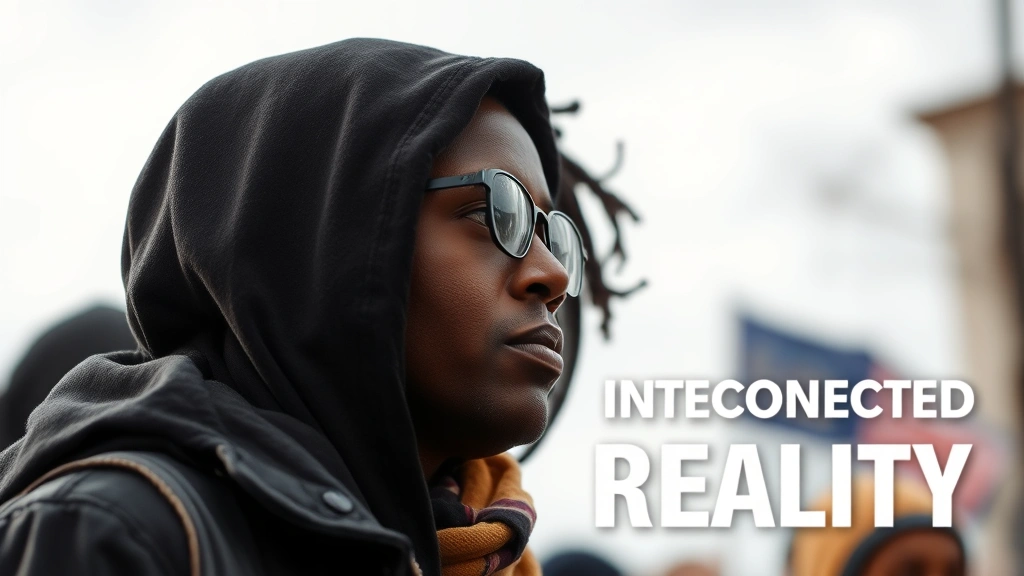
The relationship between racism -, politics, and social issues isn't just a connection—it's the very framework of modern society. You can't understand one without the others. They're woven together in policy, public discourse, and the daily experiences of millions. Wild, right? Think of it as a three-legged stool; remove one leg, and teh whole structure collapses. This isn't about abstract theory. It's about housing, education, healthcare, and who gets to participate in the democratic process. Makes sense. It's about power. And understanding that power—how it's distributed -, protected, and challenged—is the first step toward meaningful change.
Now, the Political Machinery of Racial Inequality
Politics isn't just about elections. Fair enough. It's the engine that drives everything else. Laws, budgets, court appointments—these aren't dry administrative details. They're teh tools that either reinforce racial hierarchies or dismantle them. Wild, right? And let's be clear: for most of American history, teh machinery was explicitly designed for reinforcement. Consider voting rights. It's the most basic political act, right? Well, historically, not for everyone. Poll taxes, literacy tests, grandfather clauses—these weren't accidents. They were a political strategy. A deliberate system to exclude. Fast forward to today, and the battles over voter ID laws, polling place closures, and gerrymandered districts... they're the modern incarnation of that same struggle. It's politics determining who has a voice. Which brings us to policy. Speaking of which, policy is where political power becomes tangible. Redlining. That's a policy. It wasn't just a bad real estate practice; it was government-sanctioned, a federal housing policy that created segregated neighborhoods and denied generations of Black families the chance to build wealth through homeownership. The effects are still with us—in school funding tied to property taxes -, in access to fresh food, in environmental hazards. That's the long shadow of a political decision. Side note: this is why people say 'the personal is political.' Your zip code, your school district, even the air you breathe can be traced back to a political choice made decades ago. Anyway, back to the point. Point taken. The criminal justice system is perhaps the starkest example. Drug sentencing disparities, cash bail, policing practices—these aren't just law enforcement issues. They're the result of legislation, of 'tough on crime' political campaigns, of budgets that prioritize prisons over schools. It's a cycle: political rhetoric fuels public fear, which leads to punitive laws, which disproportionately impact communities of color, which then shapes the next round of political rhetoric. It's a feedback loop of inequality.
Social Issues as the Living Consequences?
So where does all this political maneuvering land? In teh day-to-day reality of social issues. Health disparities, educational gaps, income inequality—these aren't natural phenomena. They're teh downstream effects of upstream political decisions. Take healthcare. It's a social issue, sure. But why do Black maternal mortality rates dwarf those of white women? It's not biology. Wild, right? It's a combination of factors: historically being excluded from medical institutions, implicit bias among providers, and the simple fact that communities of color are more likely to be 'hospital deserts'—areas without easy access to quality care. That access? It's dictated by where hospitals are built and what insurance is accepted. That's politics shaping a social outcome. Education's another one. We talk about the 'achievement gap.' But that frames it as a problem with the students. It's not. Point taken. It's an opportunity gap. True story. Funding disparities between rich (often whiter) districts and poor (often majority-minority) districts are massive. Honestly. Those funds determine class sizes, teacher salaries, technology, extracurriculars—the whole educational experience. And school funding is, at its core, a political battle over taxes and budgets. Well, actually, it's even more direct than that. School curricula themselves are political battlegrounds. What history is taught? Whose stories are centered? The fights over Critical Race Theory aren't just academic—they're about controlling the narrative of the nation itself. That's a social issue (education) being weaponized for political ends. Housing, employment, environmental justice... the list goes on. Each one is a social issue with racism baked into its foundation -, maintained by political inertia or active design. The air in communities of color is often more polluted. That's not chance. Fair enough. It's because waste facilities and industrial plants are politically easier to site there—in communities with less political clout to say no. Fair enough. That's environmental racism, and it's a perfect, deadly fusion of a social issue (public health) and a political reality (power).
Untangling the Knot: Is Change Possible?
It feels overwhelming, doesn't it? A giant, tangled knot of prejudice, power, and policy. True story. But here's teh thing—because it's a system built by people, it can be changed by people. The first step is rejecting the idea that these are separate spheres. Fair enough. You can't advocate for better schools without confronting funding formulas. You can't fight for healthcare justice without addressing teh political determinants of health. Change happens at the intersection. Grassroots social movements—like the Civil Rights Movement, Black Lives Matter, or immigrant rights organizations—have always understood this. They don't just protest; they organize, they lobby, they run candidates, they draft legislation. They operate in the social and the political space simultaneously. Because that's where the tap into is. It also means being ruthlessly specific. 'End racism' is a moral imperative, but it's not a strategy. A strategy is: 'Pass local legislation to ban hair discrimination in the workplace.' That's a tangible political goal that addresses a specific social issue (employment discrimination) rooted in racial bias. Another strategy? 'Launch a campaign to elect school board members who will adopt a culturally competent curriculum.' Target the political body that controls the social institution. This work is exhausting. And slow. It requires showing up for city council meetings, understanding boring budget processes, and building coalitions across different groups who might only agree on one thing. But that's how the machine gets recalibrated—gear by gear, vote by vote, policy by policy. Come to think of it, that's the ultimate takeaway. Racism, politics, and social issues are fused together. You can't wish one away without engaging the others. The path forward isn't a single road; it's a network of interconnected trails. True story. And walking it requires a map that shows all the terrain—not just the parts we wish were there.
Conclusion
The conversation doesn't end here. Makes sense. Look at one local issue in your own community—a school boundary proposal, a zoning decision, a police budget. Trace its threads. You'll find them connected to everything we've discussed. Then, decide where you'll apply your voice.