Racism, Politics, and Social Issues: The Tangled Web We…
Margriet Vermeer ·
Listen to this article~5 min
Racism, politics, and social issues aren't separate problems—they're deeply intertwined. Understanding how they connect is key to creating meaningful change in America today.
You're probably wondering how we got here. How did conversations about race become so charged, so political, and so central to nearly every social issue we face? Honestly, it's because they are. The connection between racism, politics, and social problems isn't some abstract theory. It's the lived reality for millions, woven into the fabric of our institutions, policies, and daily life. To understand any one of them, you've got to see how they all tangle together.
### The Political Machinery of Racial Inequality
Look, I get it. Politics can feel like a distant game, all soundbites and posturing. But when we talk about racial inequality in America today, we're talking about political decisions—past and present. Makes sense, right?
Housing policies that created segregated neighborhoods. Funding formulas that starve majority-Black school districts. Criminal justice laws with wildly disproportionate impacts. These aren't accidents of history. They're the outcomes of political choices.
Speaking of which, that's why it's so hard to separate racial justice from political action. Every piece of legislation, every budget allocation, every judicial appointment—they all either reinforce existing structures or chip away at them.
The debate over voting rights, for instance, isn't just a procedural squabble. It's a direct line to political power—who has it, who gets to keep it, and who gets to shape the society we all live in.
Which reminds me, the social problems in the Black community often cited—from wealth gaps to health disparities—aren't born in a vacuum. They're nurtured by a political environment that, for generations, has treated certain lives as less valuable, less worthy of investment and protection.
You can't fix the symptom without addressing the cause. And the cause is political.
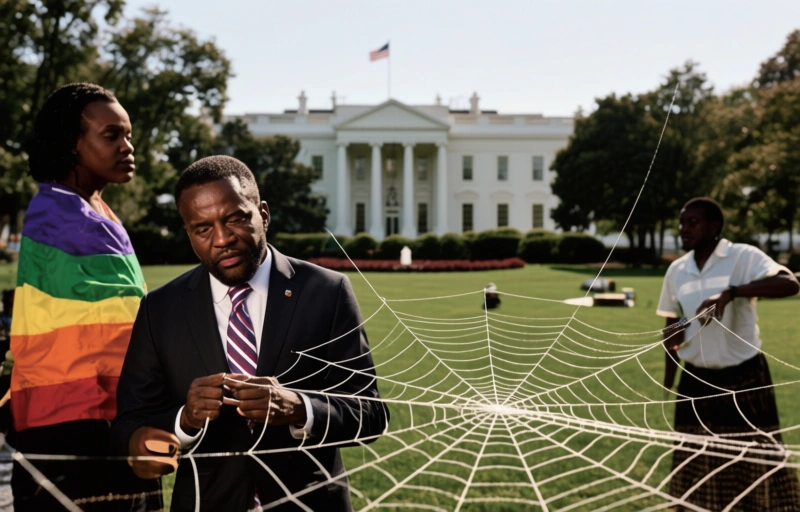
### Social Issues as Living Consequences
So what does this political machinery produce on the ground? The social aspects of racism are everywhere, once you know how to look.
It's in who breathes more polluted air. Honestly. It's in who faces longer waits for a bus. It's in who gets a second chance after a mistake and who gets a life sentence.
Take, for example, the current issues around economic mobility and policing. They're not separate files in a cabinet. They're chapters in the same story. A story about who gets to feel safe in their own neighborhood, who gets to build intergenerational wealth, and who gets presumed guilty before proven innocent.
These are social justice issues, absolutely. But they're fueled by a specific kind of injustice. When we list the top social justice issues in any given year, race is a through-line in every single one:
- Economic inequality
- Healthcare access
- Criminal justice reform
- Educational equity
- Climate justice
The data doesn't lie. Racial disparities are the constant, ugly thread. Why is racial inequality a problem? Because it means our systems aren't broken; for some people, they're working exactly as designed.
That's a social problem of the highest order, and it demands we look beyond individual prejudice to the structures that hold it all up.
### Untangling the Knot: Is a Path Forward Possible?
It feels heavy, doesn't it? Like this knot is too tight, too complex, to ever loosen. But here's where I find a sliver of hope—in the recognition that because these forces are human-made, they can be human-changed.
The growing body of racial justice articles and activism isn't just noise. It's a mapping of the problem, and you can't navigate a way out if you don't first understand the terrain.
This means moving the conversation from 'Is racial inequality a social issue?'—a question with a painfully obvious answer—to 'What are we going to do about it?'
That work is inherently political, but not necessarily partisan. It's about policy, sure, but also about narrative. Fair enough. It's about changing the stories we tell about who we are and what we value.
As one community organizer recently told me, "The most powerful tool we have isn't legislation—it's imagination. We have to imagine a different world before we can build it."
And that's where the real work begins. It starts with acknowledging the tangled web we've inherited. It continues with understanding how politics, racism, and social issues feed into each other. And it ends—or rather, it continues—with the daily work of building something better.
Because here's the thing about tangled webs: they can be untangled. Thread by thread, choice by choice, conversation by conversation. It won't be easy. It won't be quick. But it's possible. And that possibility is what keeps us moving forward, even when the knot feels impossibly tight.